
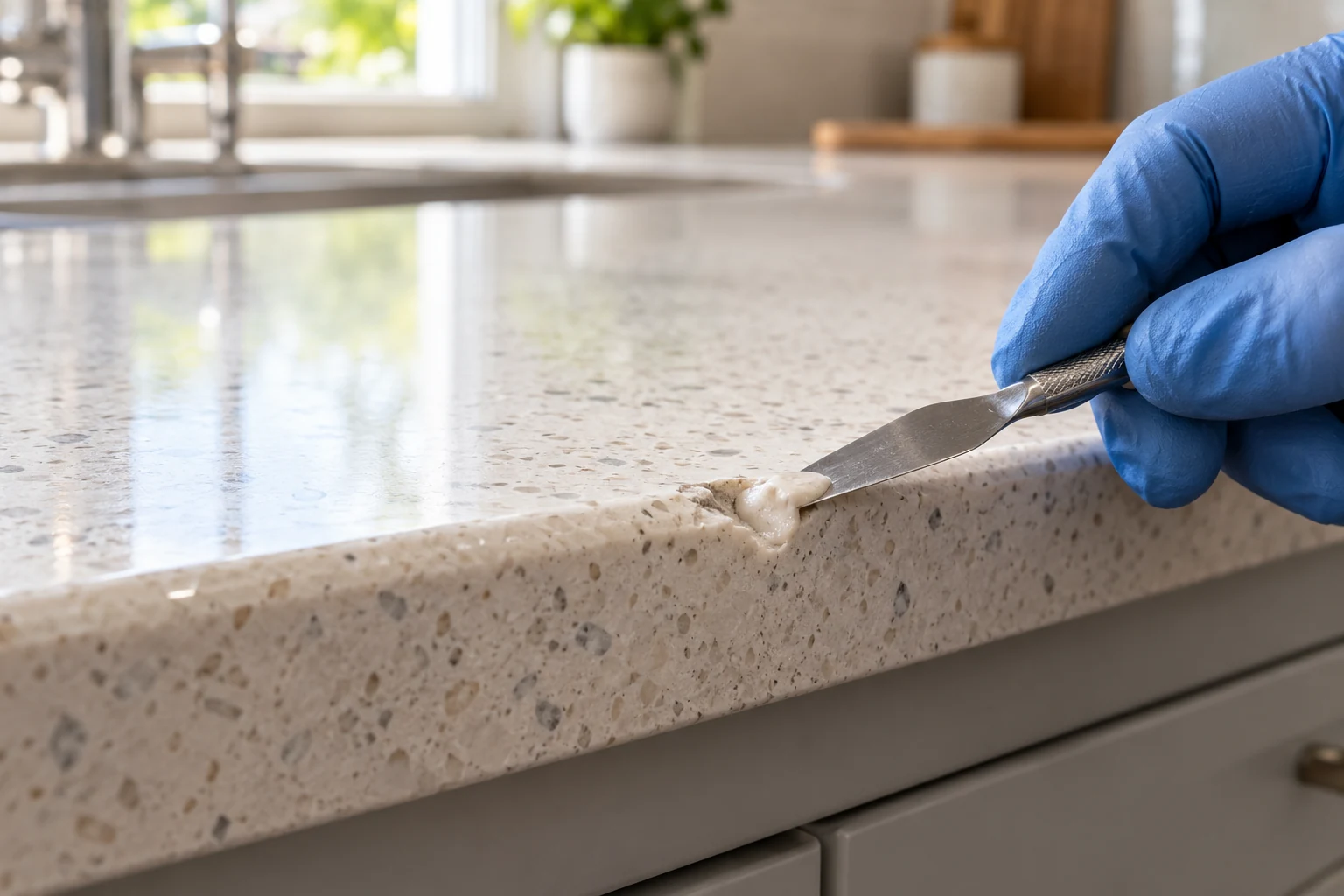
Document the specific damage
Take a whole-benchtop photograph and clear close-ups with a ruler beside each chip. Record the material if known and identify the location in the kitchen or bathroom. Include any previous repair that is visible. The purpose is to establish the work being requested, rather than relying on a vague description of a damaged bench.
Agree the requested work
The owner, occupant or property manager should make clear which chips are to be repaired and who is authorised to accept the quotation. A local chip repair is a different scope from resurfacing, film installation or replacement. We can explain practical repair options and appearance limits, but payment responsibility and tenancy decisions need to be agreed by the relevant parties.
Coordinate access and invoicing
Provide the property address, preferred contact, access arrangements and the correct invoice recipient before booking. Apartment lift bookings, parking and key collection can affect attendance. Avoid assuming that a tenant, agent and owner each hold the same appointment information. A single coordinating contact helps keep the agreed repair and visit details clear.
Explain the result in writing
The quotation should state the included damage, total price and expected limitations. Some repaired areas remain visible, particularly on porcelain or where a crack is involved. Standard chip repair starts from $450 + GST ($495 total), subject to the scope. Keep the quote and aftercare instructions with the job details so everyone understands what was completed and how to care for it.
A closer look
Details of the work.

Questions, answered.
What photos should I send for this repair?
Send a full view, clear close-ups with a size reference, the material name if known and your suburb. Include previous repairs, coatings and access details.
Is an invisible result guaranteed?
No. Colour, pattern, texture, lighting and damage affect the result. The written quote explains the likely finish and practical limitations for your stone.