
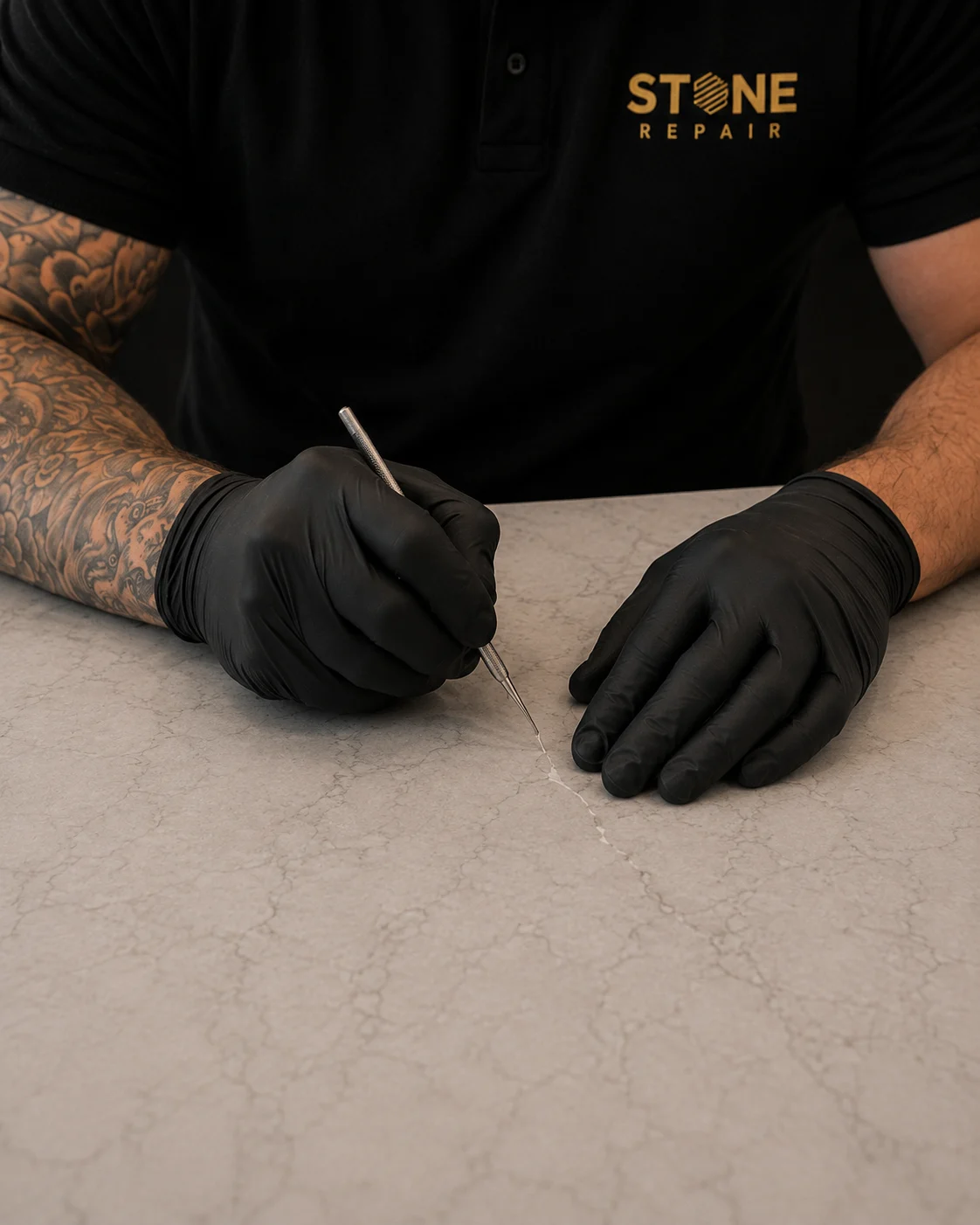
Identify the problem first
A chip, crack, failed joint and surface etch require different decisions. Applying a filler to a moving crack does not address support. Polishing engineered stone can change its factory sheen rather than restore it.
Previous products affect later work
Tell the repairer if resin, glue, paint, wax or polishing compound has already been used. Removing an unsuitable product may add preparation and can limit what can be achieved. Keep packaging or product names if available.
Choose informed advice
Send photos before experimenting, especially with a loose corner, porcelain surface or crack near an opening. The assessment can explain whether a professional repair, another treatment or replacement makes sense for the actual damage.
Consider the cost of preparation
A small unfilled chip can be easier to assess than one covered with unidentified adhesive or paint. A later professional repair may first require removal of those products, and the original surface can be damaged during unsuccessful sanding. Keep the damage clean and photograph it before deciding that a kit is the cheaper complete option.
What professional advice should explain
Ask about the material, expected visibility, limitations and any underlying support concern. The answer may be a repair, further assessment or replacement. It should not rely on a universal promise that one resin, colour or polishing method works equally well on marble, engineered stone, porcelain and every other benchtop.
Questions, answered.
What is the next step?
Send photos, your suburb and the relevant material or fitting details. The team will clarify the proposed work, its limitations and the quote before an appointment is agreed.