
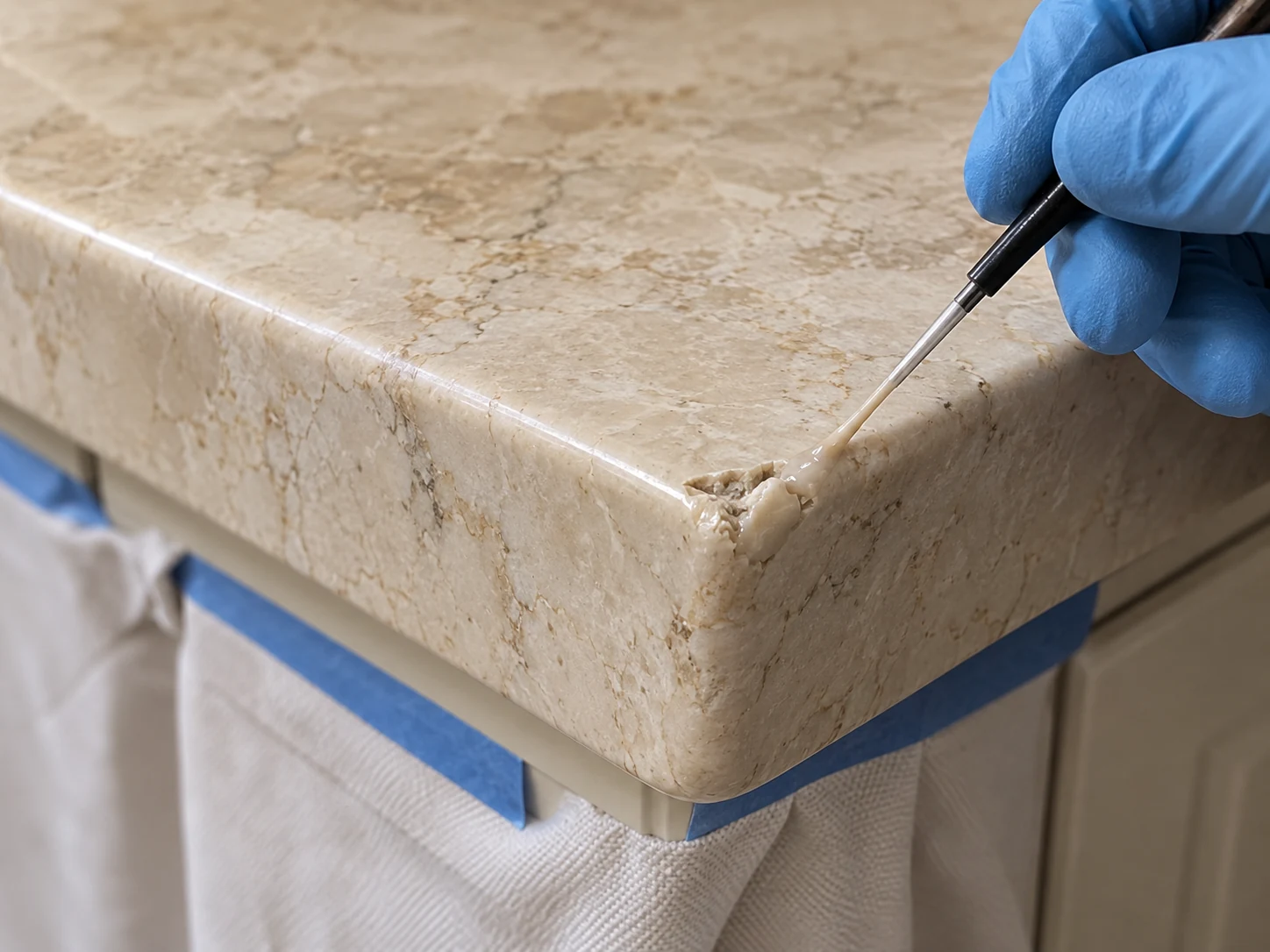
Separate the chip from the join
A small impact chip on a sound vertical panel is different from an open mitred join or a loose waterfall. Photograph the full panel, its connection to the benchtop and the damaged area. Tell us if the join is uneven or the panel has moved. A cosmetic fill cannot be assumed to make an unstable installation sound.
Colour and edge alignment
Vertical stone catches light differently from the horizontal bench above. Colour, vein direction and the shape of the corner can all influence repair visibility. Close-up photographs should include intact stone on both sides of the damaged area. The aim is an appropriate local repair, with any remaining difference explained; the patch does not recreate every vein through the original slab.
When replacement enters the discussion
Unsafe, loose or badly aligned waterfall connections can justify replacement advice rather than a simple refill. Large missing corners and cracks may also change the scope. Do not test a panel by pushing or lifting it. Explain the observed problem and send pictures so the next step can be planned around the condition of the complete installation.
Planning a suitable visit
Include the suburb, panel height, approximate chip size and access beside the island. Move chairs and portable items out of the immediate area. Any support, cabinet alteration or stone replacement must be specified separately from a chip repair. The written quote should identify the repair locations, expected finish and any work needed before attendance.
Questions, answered.
What photos should I send for this repair?
Send a full view, clear close-ups with a size reference, the material name if known and your suburb. Include previous repairs, coatings and access details.
Is an invisible result guaranteed?
No. Colour, pattern, texture, lighting and damage affect the result. The written quote explains the likely finish and practical limitations for your stone.