
Show the whole edge
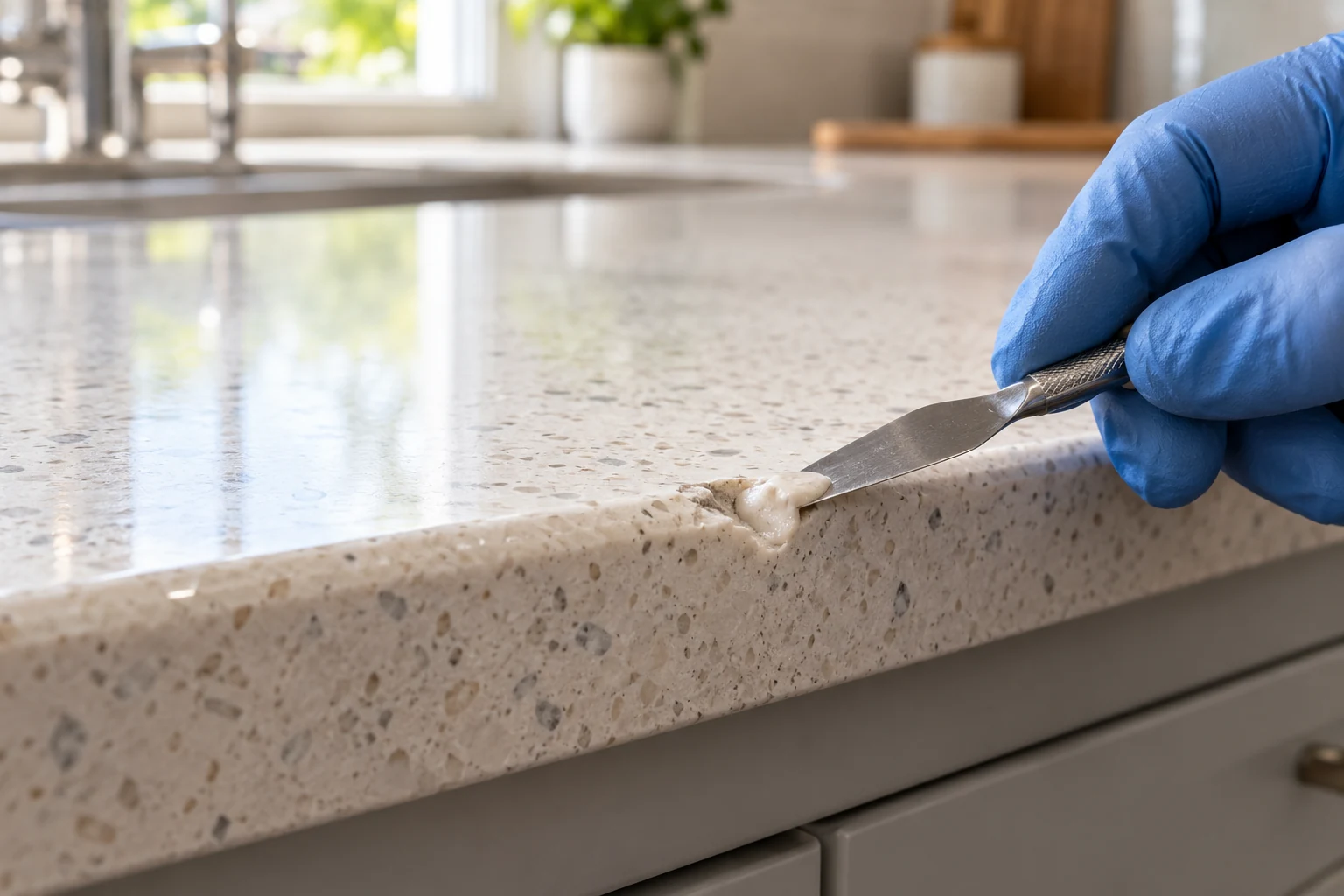
Photograph the damaged edge with the dishwasher both visible and clearly identified. Several small chips may be spread along the opening rather than confined to one spot. A front view and an underside view, where easily accessible, help show the depth and original profile. Include a ruler beside the damage and make clear how many areas need repair.
Consider what caused the damage
Tell us if a pot struck the edge, if the appliance catches it or if damage keeps recurring. A suitable local repair rebuilds missing material; it does not automatically correct appliance alignment, cabinet movement or clearance. Where another trade is needed, that work should be identified separately. Repeated contact can damage a newly repaired area as well as original stone.
Access and preparation
Clear cookware, cleaning products and loose items from the immediate work area. Do not pull out the dishwasher or disconnect services unless that is specifically arranged with an appropriate person. Explain any tight access, protective film or previous repair. The technician needs to know the existing condition before agreeing what can be done around installed fittings.
Scope and ongoing use
The quote should list the chips being addressed and any excluded cabinet or appliance work. We aim for an appropriate colour blend and edge shape, with likely visibility discussed. Return-to-use and cleaning instructions depend on the chosen system. After the repair, keep cookware clear of the edge and arrange any necessary alignment work to reduce repeated impacts.
Questions, answered.
What photos should I send for this repair?
Send a full view, clear close-ups with a size reference, the material name if known and your suburb. Include previous repairs, coatings and access details.
Is an invisible result guaranteed?
No. Colour, pattern, texture, lighting and damage affect the result. The written quote explains the likely finish and practical limitations for your stone.