
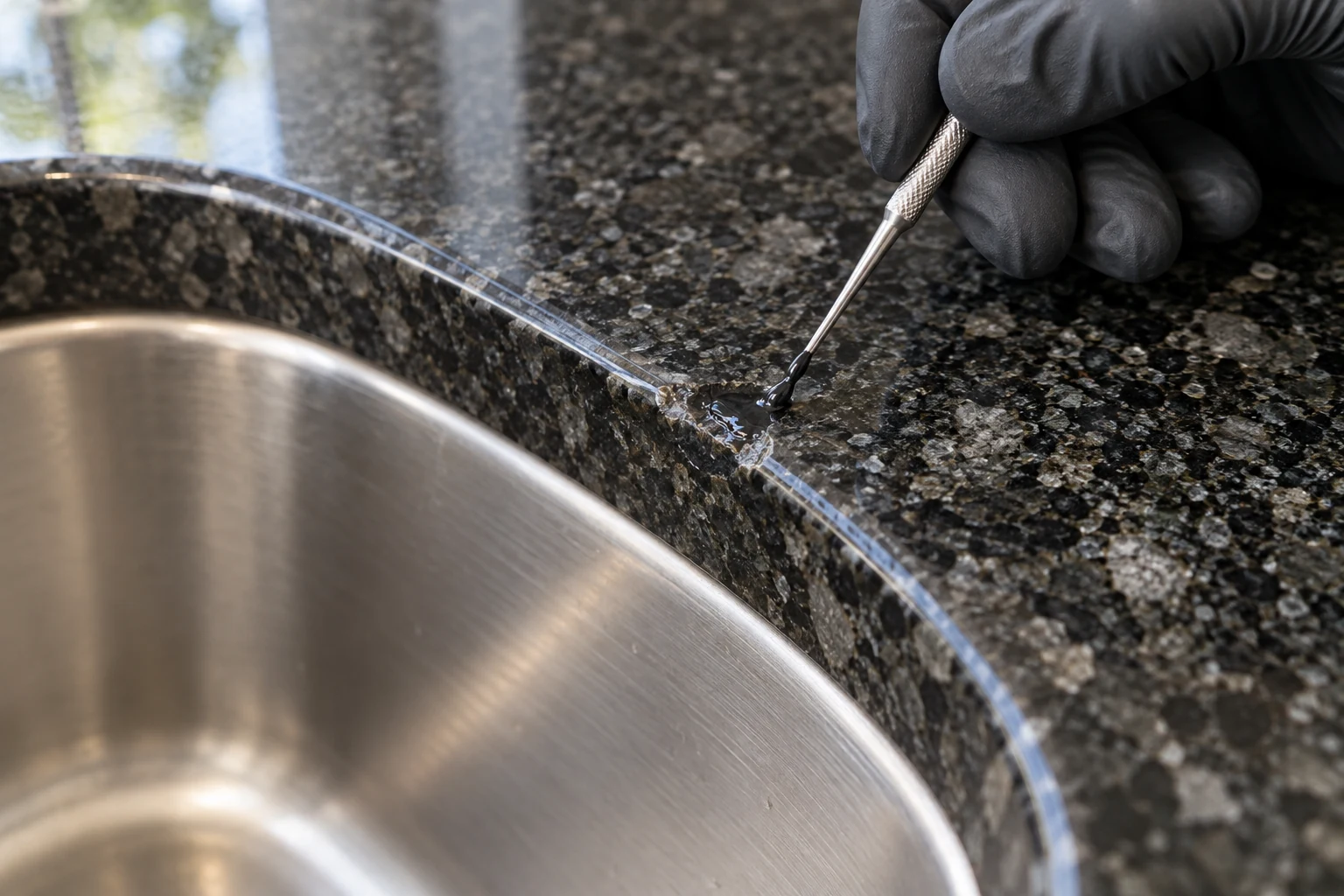
Identify the damaged area
Natural granite varies across a slab. Dark minerals, reflective crystals and veins can influence how a repair blends. A small missing piece from a sound edge may be a local repair candidate. Larger broken corners or chips joined to a spreading crack need a broader assessment of the installation. Include a full-benchtop view rather than relying on one close-up.
Pattern and profile
The repair needs to suit the edge shape as well as the visible mineral pattern. A dark background does not automatically make every repair disappear: reflective particles and surface sheen can reveal differences. We consider what is practical for the actual damage and explain the likely appearance. A rounded edge, bevel and square profile each require different attention to the finished detail.
Repair and restoration are different scopes
Filling a chip is different from restoring a scratched or dull section of natural stone. If both are present, identify them separately in your enquiry. Do not assume a local chip quote includes polishing the full benchtop or sealing every surface. Any broader restoration should be discussed as its own material-specific scope.
Before arranging a visit
Send the suburb, dimensions, clear pictures and details of earlier glue or filler. Keep loose fragments safely. If damage is beside a sink, show the opening and relevant access without dismantling fittings for a photograph. The written quotation confirms the included work, practical limits and any additional preparation or support concerns.
Questions, answered.
What photos should I send for this repair?
Send a full view, clear close-ups with a size reference, the material name if known and your suburb. Include previous repairs, coatings and access details.
Is an invisible result guaranteed?
No. Colour, pattern, texture, lighting and damage affect the result. The written quote explains the likely finish and practical limitations for your stone.