
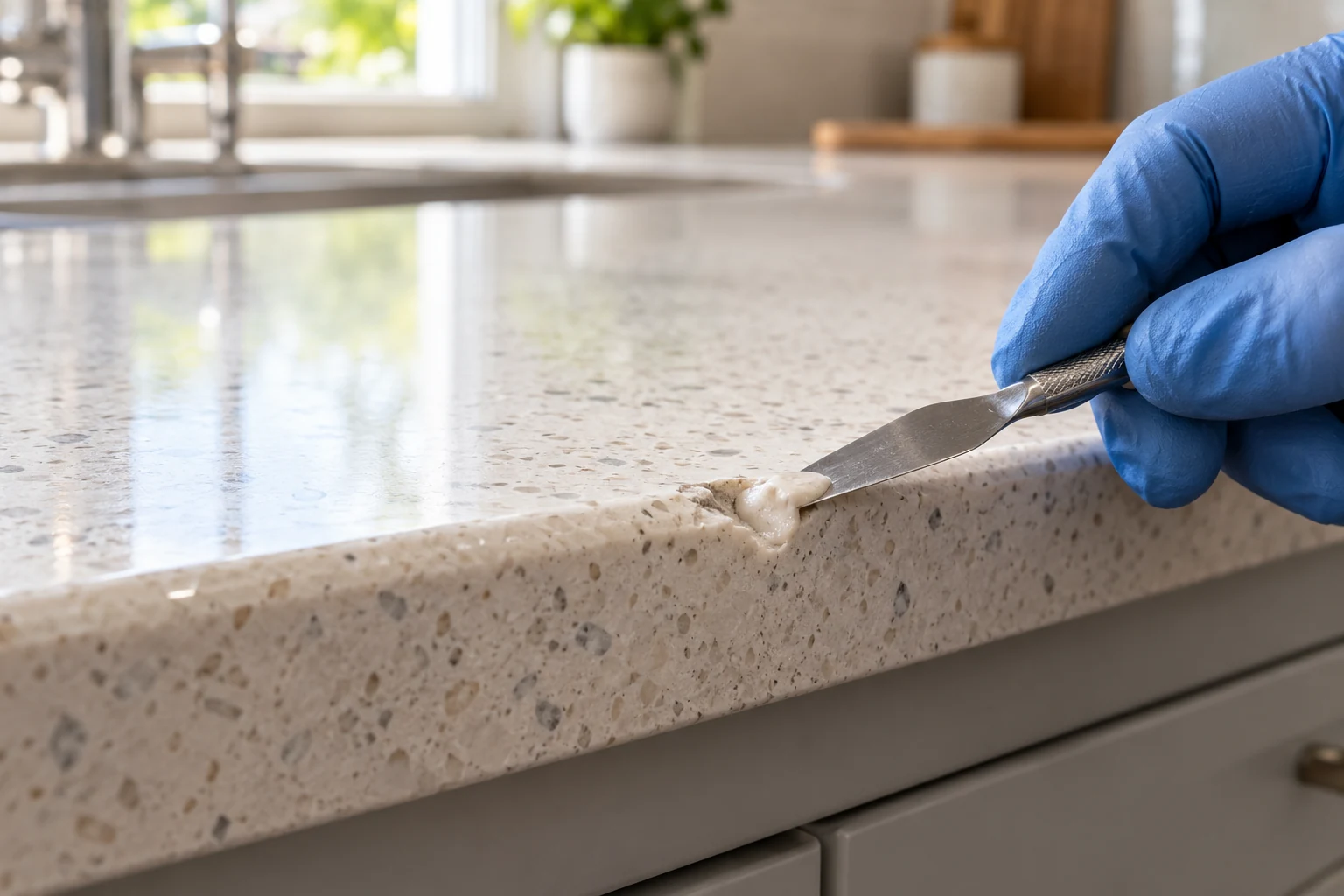
Record the existing profile
An intact section beside the chip is the best reference for the original edge. Photograph it straight on and from the end where accessible. Square edges may carry a small bevel, while rounded edges have a continuous curve. A repair that ignores those details may catch light differently or feel inconsistent even if its colour is close.
Shape and texture work together
The repaired outline should be assessed alongside its surface texture and finish. A raised patch, hollow area or abrupt transition can remain noticeable. The practical outcome depends on the damage, material and chosen repair system. The aim is an appropriate finished profile, rather than assuming colour matching alone makes a repair successful.
Complex edges need clear scope
Mitred corners, waterfall joins and shaped sink rims can present more than a simple missing fragment. Show the complete connection and tell us about cracks or movement. Large broken sections may need replacement advice. Support and alignment issues are separate from locally recreating an edge, and should be discussed in the written proposal.
What to ask before booking
Ask which damaged areas are included, what profile will be rebuilt and what difference may remain. Include the chip dimensions and material information when requesting a quote. After repair, follow the system-specific instructions before using or cleaning the area. If you have a concern about the finish, send clear pictures rather than trying to reshape the patch yourself.
A closer look
Details of the work.

Questions, answered.
What photos should I send for this repair?
Send a full view, clear close-ups with a size reference, the material name if known and your suburb. Include previous repairs, coatings and access details.
Is an invisible result guaranteed?
No. Colour, pattern, texture, lighting and damage affect the result. The written quote explains the likely finish and practical limitations for your stone.