
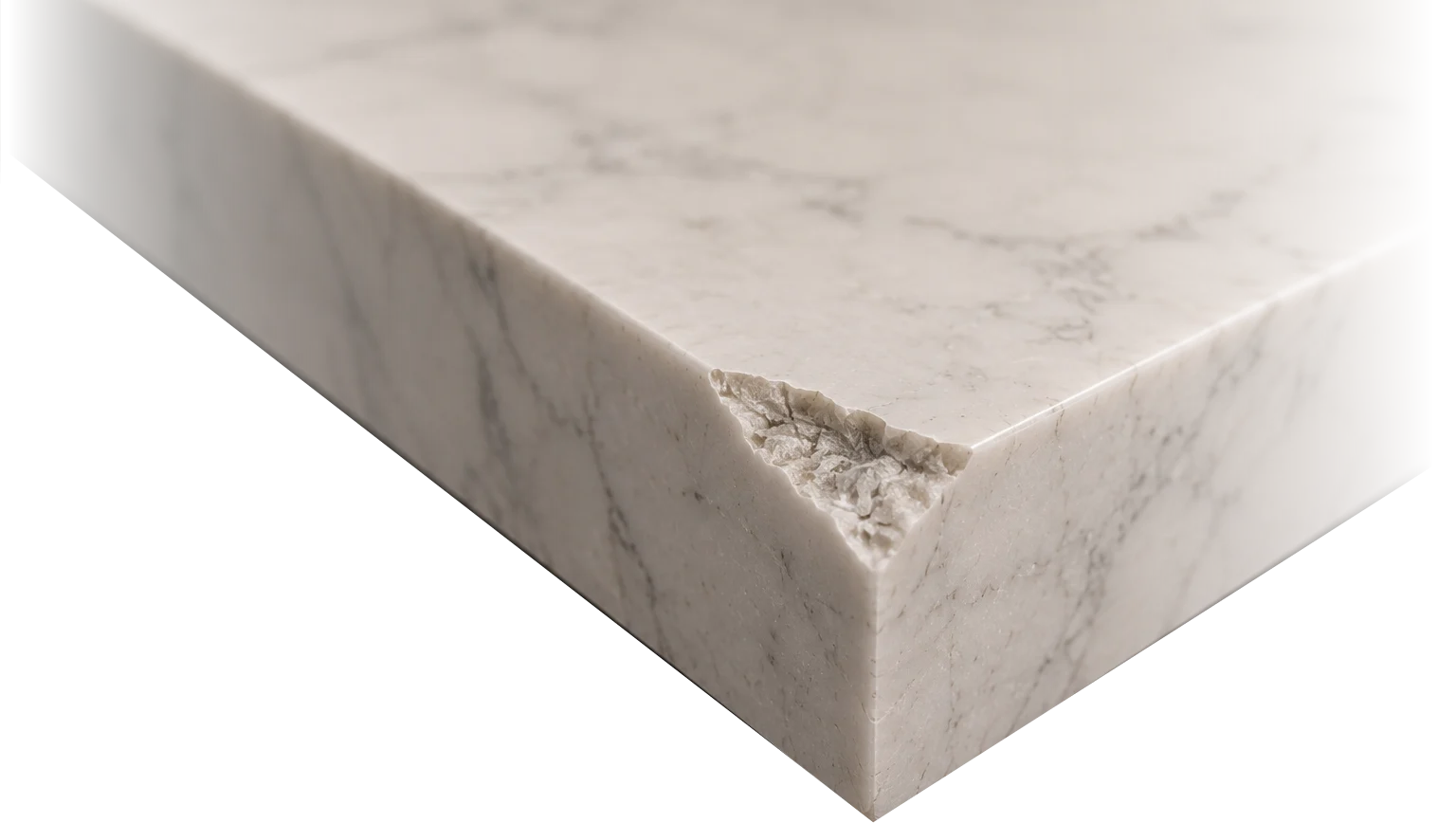
Use scale and ordinary light
Put a ruler beside the damage without covering it. Photograph the stone dry in diffuse daylight, then add a side-lit view if the concern is sheen. Avoid filters and heavily zoomed images that hide texture.
Show the context
A crack should be shown to both endpoints. A chip beside a sink needs the opening and fitting in view. A joint needs an overhead and side photo. Safely accessible underside photos can help explain support without moving the stone.
Add the missing facts
Name the suburb, material, incident and previous treatments in the message. Number separate damaged points. Do not move a heavy top, remove an appliance or reach into an unsafe space just to obtain a photo.
A simple photo sequence
Start at the doorway for a whole-kitchen view. Take a second photo directly above the affected section. Move closer for a sharp scale image, then add an edge view for missing material or a low-angle view for sheen. For multiple marks, use simple labels in the message such as chip one, chip two and sink joint so each quotation item can be identified.
Common missing details
A coin gives some scale but a ruler is clearer. A close-up without an overall view can conceal that the chip sits beside a crack. A wet surface can hide dullness. If a photo is blurred, retake that view rather than sending more copies of the same unclear image. Keep original-resolution files where practical.
Questions, answered.
What is the next step?
Send photos, your suburb and the relevant material or fitting details. The team will clarify the proposed work, its limitations and the quote before an appointment is agreed.