
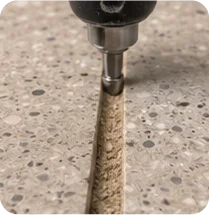
Describe the failure
Say whether filler has discoloured, fallen out, cracked or separated from the stone. Note the original repair date if known, any guarantee paperwork and changes to appliances, cabinets or support since then.
Show the surrounding installation
An old seam repair needs both adjoining sections and a side view. A chip needs the whole damaged corner. If the stone moves, do not hold it together for a photograph that hides the problem.
Agree a revised scope
Removal of earlier material, support work or replacement may need discussion. A second repair cannot automatically be made invisible or guaranteed to outlast an unresolved movement problem. The written proposal should explain what is changing this time.
Useful evidence from the earlier work
Provide the previous scope, product information and photographs if you have them. Explain whether the repair ever looked acceptable and what changed afterwards. A colour difference present from day one is a different complaint from a seam that reopened months later. Those details help the team assess appearance and durability as separate issues.
Know the limit of another repair
A new repair may improve the finish without eliminating every trace of earlier work. If material was removed or a large patch was installed, options can be more limited than for fresh damage. Discuss the acceptable result before committing, and ask whether replacement would better meet your goal.
Questions, answered.
What is the next step?
Send photos, your suburb and the relevant material or fitting details. The team will clarify the proposed work, its limitations and the quote before an appointment is agreed.