
Make a simple damage map
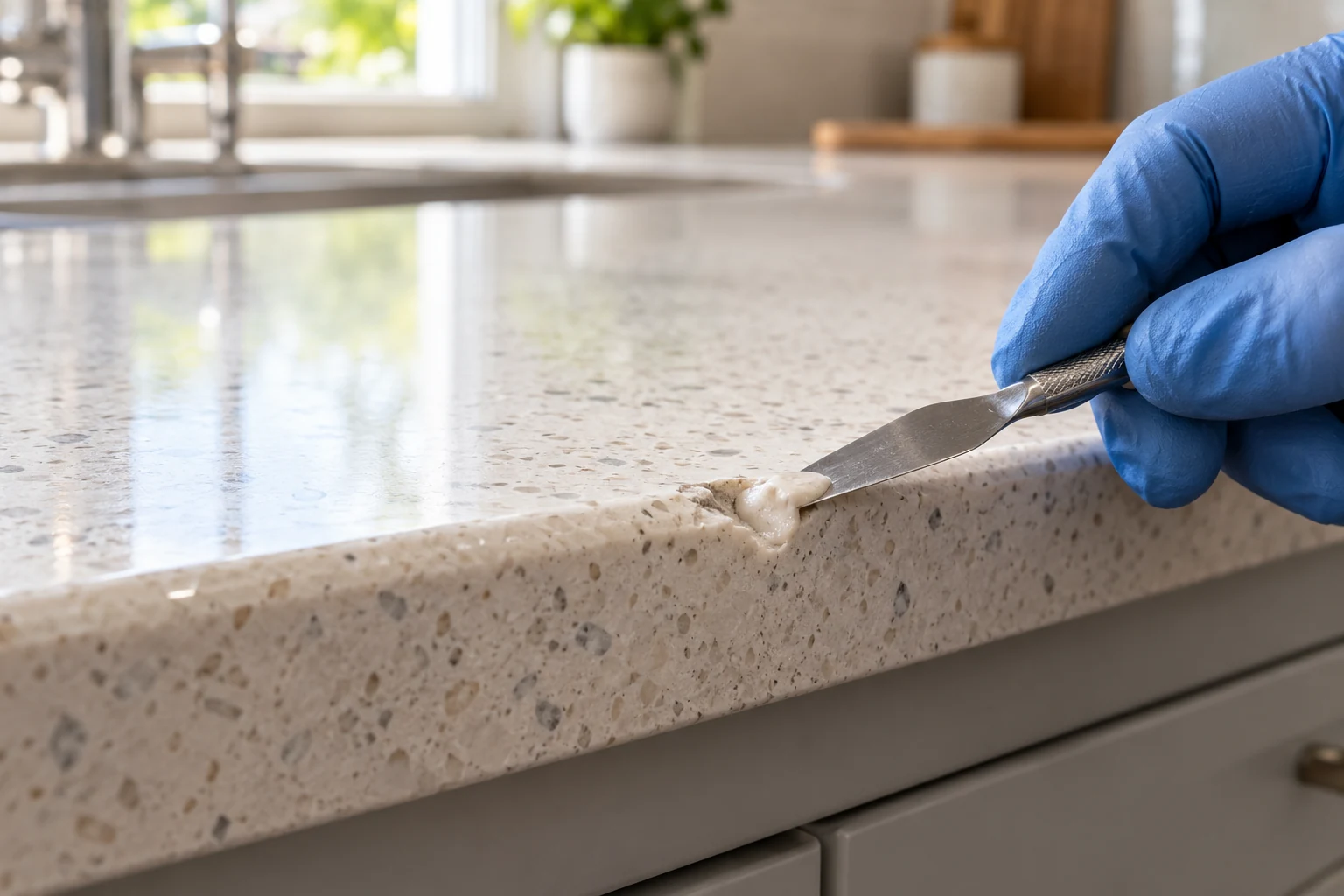
Take one whole-benchtop photograph and identify the separate chip locations. Then add a close-up of each with a size reference. Mention damage around the sink, dishwasher, island and exposed corners. A numbered list makes it easier to connect each picture to the quotation and reduces the chance that a small chip elsewhere is mistaken for the same one.
Size and material affect the scope
Several shallow edge chips are different from a large broken corner plus a crack. Tell us the material name if known and show any previous repairs. Porcelain carries an additional $100 + GST ($110 total) per chip and remains visibly repaired. Damage connected to movement, unsupported stone or a larger fracture may need separate assessment rather than being counted as another small chip.
How the price is confirmed
Standard chip repair starts from $450 + GST ($495 total). Additional small chips typically add $100 + GST ($110 total) and larger chips $150 + GST ($165 total), with the complete price confirmed in writing. Those starting figures are not a promise that every combination of damage fits the same scope. Travel, access, material and complexity can affect the proposal.
Agree the list before work starts
Check that the quote identifies all locations you want addressed. If further damage is found on arrival, discuss the revised scope before additional work proceeds. Clear the working areas and ask which cupboards need access. After completion, keep the care instructions for the chosen repair system and share them with anyone using or cleaning the kitchen.
A closer look
Details of the work.

Questions, answered.
What photos should I send for this repair?
Send a full view, clear close-ups with a size reference, the material name if known and your suburb. Include previous repairs, coatings and access details.
Is an invisible result guaranteed?
No. Colour, pattern, texture, lighting and damage affect the result. The written quote explains the likely finish and practical limitations for your stone.