
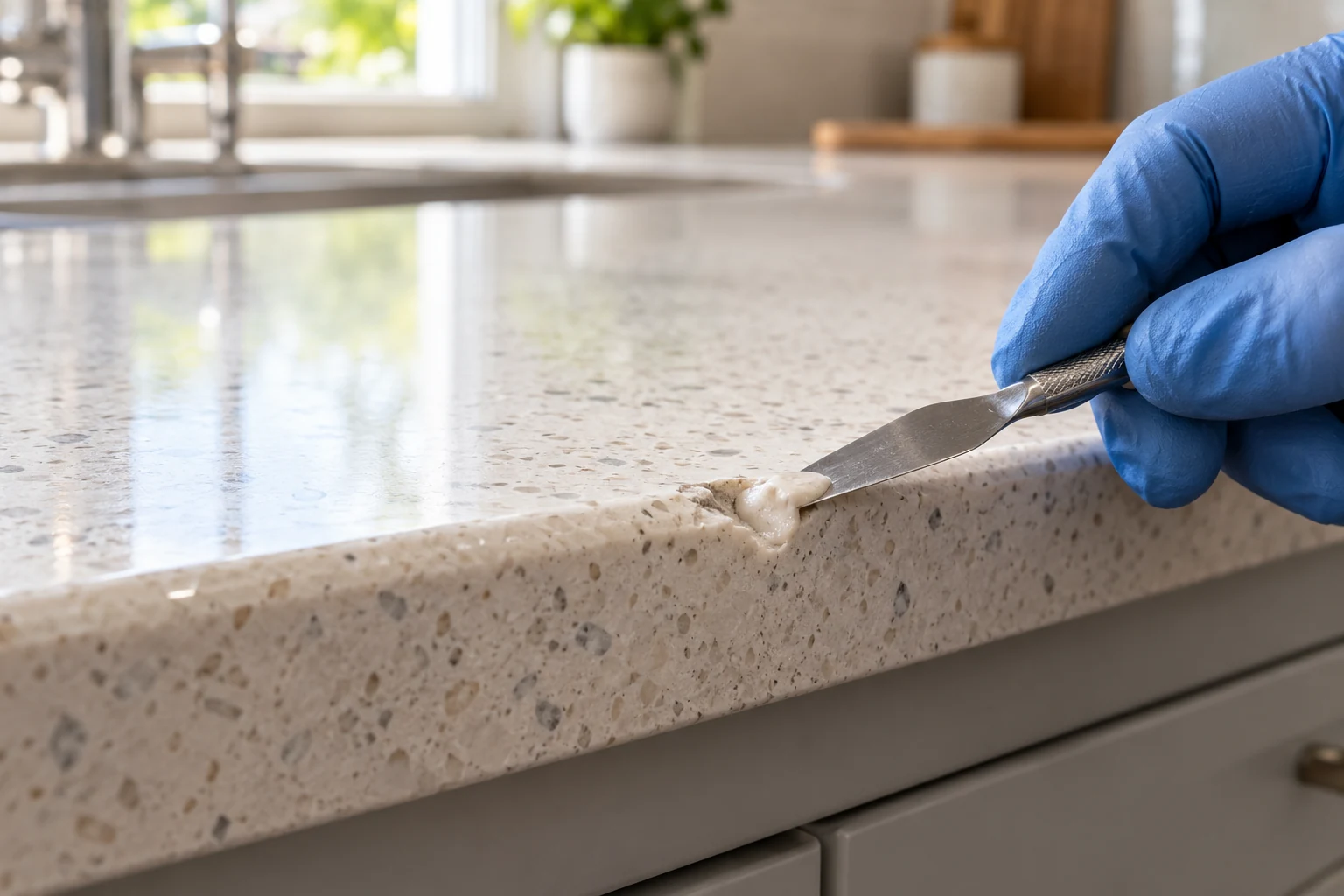
White is not one colour
A white benchtop may have a warm cream base, a cool grey cast, translucent particles or fine flecks. Existing lighting can make those details difficult to see in phone photographs. Send a clear close-up in ordinary daylight and a wider photograph showing the surrounding surface. The brand and colour name, if known, help identify the original material.
Why shape matters alongside colour
At an exposed edge, a slight difference in profile can cast a shadow that draws attention to the repair. The top face, radius and underside all contribute to the appearance. Colour matching alone cannot compensate for an inappropriate shape. The proposed repair should address the damaged geometry and explain whether texture or sheen differences may remain.
Expectation before booking
A pale uniform surface can show a repair more clearly than a busy pattern. Viewing distance, direction of light and damage size change the result. We assess whether rebuilding the missing material is practical and discuss the likely visual limits. Porcelain and cracks remain visibly repaired; their outcomes should not be assumed to match those of a small quartz edge chip.
Useful enquiry details
Include the chip dimensions, the suburb, a whole-benchtop photo and any previous treatment. Mention whether a protective film covers the surface or if another repair has been attempted. Do not add paint or household filler before assessment. A written quote confirms the affected chips, the price and the anticipated result for your particular stone.
A closer look
Details of the work.
Questions, answered.
What photos should I send for this repair?
Send a full view, clear close-ups with a size reference, the material name if known and your suburb. Include previous repairs, coatings and access details.
Is an invisible result guaranteed?
No. Colour, pattern, texture, lighting and damage affect the result. The written quote explains the likely finish and practical limitations for your stone.