
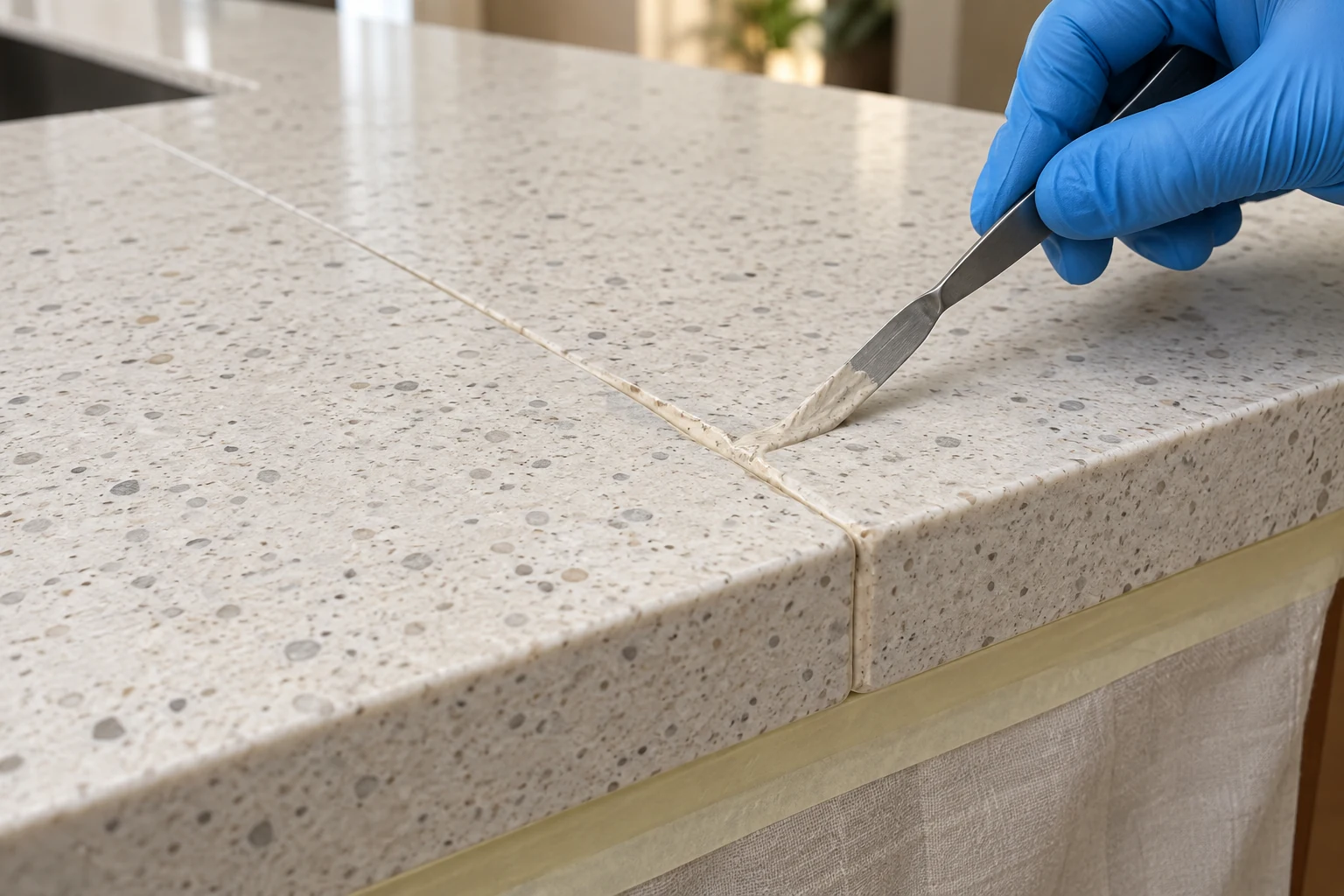
Define each affected counter
Provide a numbered list of damaged surfaces with photographs, material details and approximate dimensions. Reception desks, shared kitchens and café counters have different access and usage patterns. Identify chips, open joints and surface marks separately. A single description of general damage can conceal several different repair scopes and make scheduling harder to establish.
Plan access around the business
Tell us who can admit the technician, where equipment can be unloaded and whether a building induction is required. Include operating hours, busy periods and restrictions around the counter. Out-of-hours work must be arranged and quoted rather than assumed available. The expected duration and return-to-use requirements are confirmed for the repair system and actual work.
Appearance and operating needs
Explain whether the priority is a customer-facing edge, a frequently used sink rim or a broader restoration concern. Colour, profile and finish still govern repair visibility. A local repair does not automatically include changing support, moving appliances or replacing plumbing fittings. Food-service or operational requirements should be raised when the scope is planned, without assuming every repair product is suitable for every application.
Scope, approvals and handover
Nominate the person authorised to approve work and provide invoicing details before booking. The quotation should list each repair, relevant limitations and any separate trades or treatments. Share the care and return-to-use instructions with staff and cleaners after completion. Sydney work and scheduled Melbourne or Queensland visits are confirmed by address and scope; this page does not promise emergency or nationwide availability.
Questions, answered.
What should I send for a quote?
Send a whole-surface photograph, close-ups with a size reference, your suburb, material details if known and the history of any earlier repairs or coatings.