
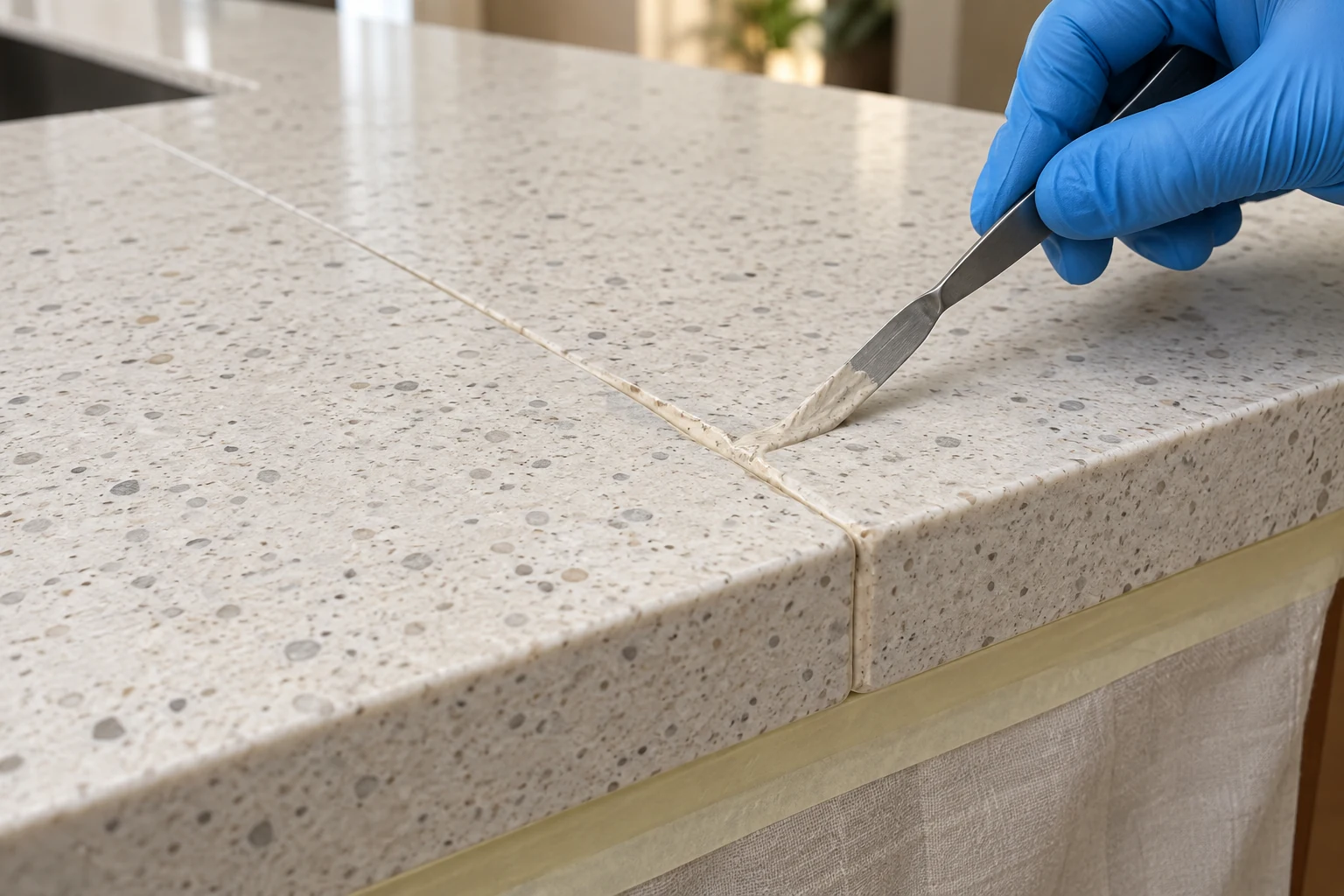
Record the condition before treatment
Photograph the full joint and a close-up where the colour differs. Explain whether the filler is simply discoloured, is missing in places or has separated from an edge. Tell us about cleaning products and earlier treatments already used. Different concerns can look similar in a photograph, so avoid choosing a repair solely from the colour.
Inspect the adjoining detail
Show both stone pieces and whether they are level. A discoloured line accompanied by an opening gap or movement needs broader context. The enquiry should include nearby sink or cooktop openings and the cabinet arrangement where readily accessible. Do not scrape out the joint or add another layer of adhesive before the existing condition is considered.
Repair expectations
An agreed joint repair may involve preparing deteriorated material and refilling the seam with a suitable colour. It does not guarantee the line will disappear or correct an unstable installation. Adjacent pieces may differ in tone or pattern, and the finished joint remains part of the original layout. Preparation and cure requirements belong to the chosen repair system.
Request a clear quotation
Send the suburb, approximate joint length, material details and photographs. Identify each joint if there is more than one. The written scope should specify the included preparation, refill, expected appearance and any separate support concerns. Starting prices are confirmed against the actual work, so cleaning a residue and rebuilding a deteriorated seam should not be treated as identical jobs.
Questions, answered.
What should I send for a quote?
Send a whole-surface photograph, close-ups with a size reference, your suburb, material details if known and the history of any earlier repairs or coatings.