
Describe the incident
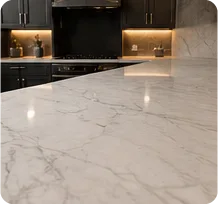
Identify the appliance, pan or other heat source and how long it was present if known. Send dry photographs showing the mark, entire section and any adjoining waterfall. List cleaners or abrasives used afterwards.
Consider the cost of surface removal
Sanding changes the factory sheen. Even if the colour improves, the treated patch may still be visible. Suitable treatment may be combined with full-section gloss film for consistency, with preparation and film priced separately.
Keep replacement on the table
Some deep burns, distortion or associated cracking may not produce an acceptable repair. Discuss the appearance you would accept before proceeding. Do not assume a small mark means a guaranteed inexpensive local fix.
Keep the assessment specific
A photograph should show whether the mark is discolouration only or is accompanied by cracking or a change in shape. Do not scrape or press the surface to investigate. Tell the team if the affected area is beside a seam or appliance opening, where the condition of the surrounding installation can influence the recommendation.
Agree the appearance before the appointment
A quote should identify the treatment area and expected limitations. If full-section film is proposed, check whether it covers the whole island or only one run, and what happens at joins and waterfalls. Compare that complete scope with replacement rather than comparing a sanding price alone with the cost of a new top.
Questions, answered.
What is the next step?
Send photos, your suburb and the relevant material or fitting details. The team will clarify the proposed work, its limitations and the quote before an appointment is agreed.