
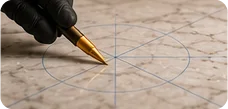
Factory sheen is not a polishing target
Sanding changes the manufactured finish. A local patch may remain conspicuous even if the colour improves. Where surface treatment is appropriate, full-section gloss protection film may be proposed; surrounding uncovered surfaces can still differ.
Identify the installed product
Send the brand, range, colour and approximate installation date if known. Product composition differs between ranges, so a brand label alone is insufficient for planning processing or surface treatment.
Photos that help
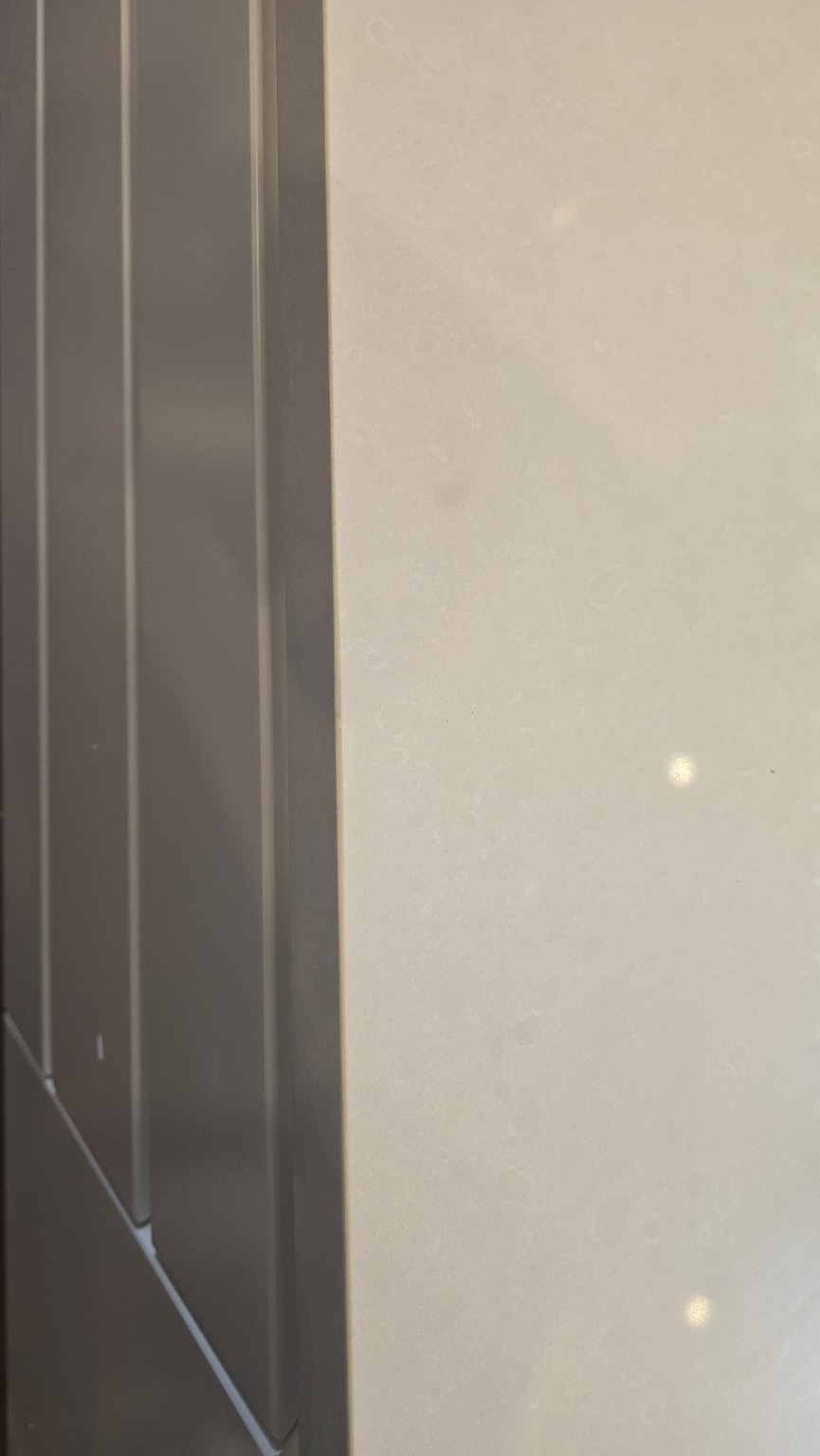
Provide a full view of the surface, a dry close-up with a size reference, and a side-on view of any affected edge. Identify whether the mark is a chip, crack, dull patch or discolouration and tell us what happened. A clear description reduces the chance of quoting for the wrong treatment.
An agreed scope before work
We confirm the proposed work, its limitations and price before the appointment. Material identity, access and the condition of adjoining stone matter as much as the size of the visible mark. If the expected repair will not meet your goal, replacement or a different treatment can be discussed.
See a completed repair
Questions, answered.
How do I get a repair quote?
Send one full-benchtop photo, close-ups of the damage, your suburb and the material name if known. Include a ruler beside the damage and tell us about any previous repair.
Will the repair be invisible?
Results depend on material, colour, damage and lighting. Colour matching aims to reduce the visual impact. Cracks and porcelain repairs remain visible; no repair is promised to be invisible.