
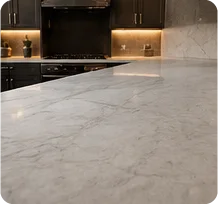
Staining and surface change
A sealer may reduce absorption and improve resistance to some staining; it does not make stone stain-proof. Acidic substances can affect susceptible natural stone and alter its surface finish. A dull patch and an absorbed stain may therefore need different assessment. Tell us whether the concern is changed reflection, discolouration or both.
Do not assume every stone needs the same treatment
Natural Stone Institute guidance notes that some stones may not require sealing. The material, finish, existing treatment and proposed product all matter. Discuss the actual bench with the supplier or specialist rather than applying a fixed calendar to every stone. A fresh chip repair may also have separate cure requirements before surrounding treatment is considered.
Repair, restoration and protection
Local chip rebuilding addresses missing material. Natural-stone restoration addresses an agreed surface condition. Sealing and protection film are separate treatments with their own scope. If your priority is protecting a marble kitchen from daily use, ask how the proposed option handles the risks that matter to you. No single treatment should be assumed to replace careful use and cleaning.
Get advice for the actual surface
Provide the stone name, finish, photographs and details of previous sealers or coatings. Explain the marks already present and the outcome you want. The written proposal should distinguish treatment of existing damage from future protection. For stone-specific cleaning, consult the official guidance linked below and the instructions for any installed repair or covering.
Official guidance
Natural Stone Institute: care and cleaningQuestions, answered.
What should I send for a quote?
Send a whole-surface photograph, close-ups with a size reference, your suburb, material details if known and the history of any earlier repairs or coatings.