
Look at the original surface
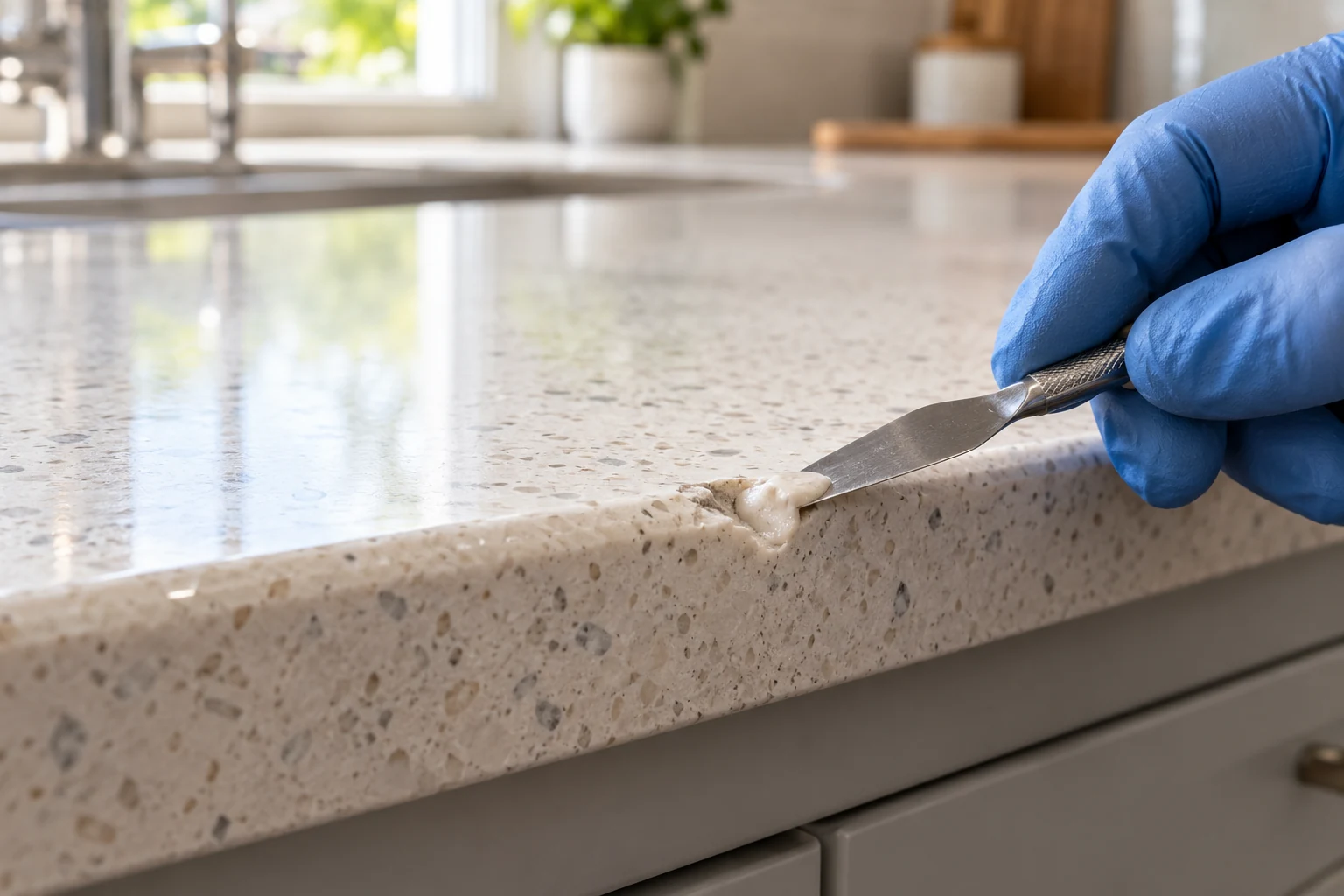
A speckled pattern may visually break up a fill, while a plain white or dark polished surface can expose small differences. Ask about the result on your actual material rather than treating one successful repair photo as a guarantee for every benchtop.
Choose a realistic goal
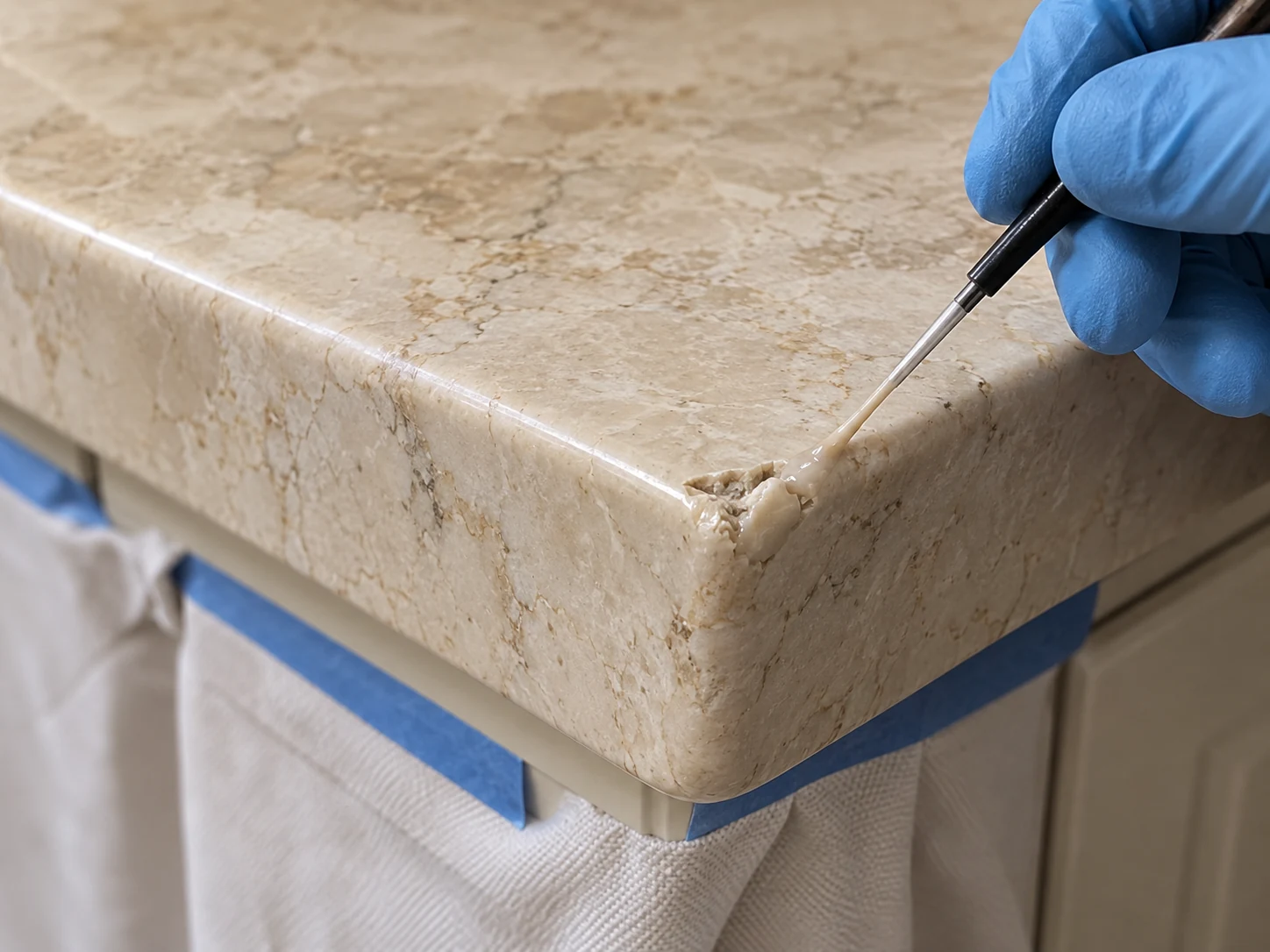
A good repair can rebuild the edge and reduce the visual impact of damage. It is not a promise that nobody will ever find it. Porcelain repairs and filled cracks need particularly clear expectations because their visible limitations are part of the service.
Show the normal viewing angle
Take a photograph from where you usually stand as well as a close-up. Strong side lighting matters. If the concern is an entertaining island viewed from several directions, explain that before accepting a cosmetic scope.
Assess the repair from normal use
When considering a repair, separate the damaged shape from the remaining visual difference. Rebuilding a sharp missing corner may make an edge easier to use even if you can still locate the fill. Conversely, a very small mark on a highly uniform island might bother you more than a larger repair on a patterned surface. Describe that priority before the quote is accepted.
Questions worth asking
Ask whether the repaired edge will follow the existing radius, whether colour and sheen differences are expected, and what care it will need. If a sample photograph is discussed, check that it represents the same material and damage type. A photograph of a different stone cannot establish the result on your own top.
A closer look
Details of the work.
Questions, answered.
What is the next step?
Send photos, your suburb and the relevant material or fitting details. The team will clarify the proposed work, its limitations and the quote before an appointment is agreed.